quarta-feira, 18 de janeiro de 2023

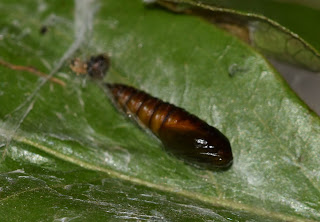
Nomophila noctuella (Rush Veneer)


Scientific name: Nomophila noctuella

English name:  Rush Veneer

Found in: Lousada, Porto, Portugal

Larvae: September Pupa: September Imago: September


Biology:


N. noctuella has a wingspan around 28mm

The Larvae feeds in various herbaceous plants and grasses, however I was more successful breeding them in Trifollium sp and Rumex sp.  The L4-L5  caterpillar preferred to bury itself in the ground and usually at twilight/nightfall was the time I registered them feeding. However, earlier stages since I didn't use soil, it seemed no difference on what time they feed. The pupa took around 1 weeks to hatch at room temperature. This species is a fast growing one


Ecology:


This species is very common on Urban areas probably because of the lack of cultivation and use of pesticides in most plants.


PT


Nome Cientifico: Nomophila noctuella

Local encontrada: Lousada, Porto, Portugal

Larva: Setembro Pupa: Setembro Adulto: Setembro


Biologia:

N. noctuella tem uma envergadura de aprox. 28mm.

A lagarta alimenta-se em várias plantas herbáceas e ervas, contudo tive mais sucesso em Trifollium sp e Rumex sp. As Lagartas L4-5 preferiam enterrar-se e na hora crepuscular/noite elas saiam e alimentavam-se mais assiduamente. Contudo, nos estádios iniciais, uma vez que não utilizava terra, não pude registar se também tinham este comportamento. A pupa demorou cerca de 2 semanas a eclodir (temperatura ambiente). Esta especie e de crescimento rapid


Ecologia: 

Esta espécie é bastante comum em zonas urbanas provavelmente por haver pouco uso de pesticidas e/ou cultivo.


domingo, 8 de janeiro de 2023


Scientific name: Bena bicolorana 

English name: Scarce silver-lines

Found in: Collserola, Barcelona, Spain

Larvae: April Pupa: April Imago: May


Biology:

Wingspan is about 40mm. The larvae were found on Quercus robur new leaves, which makes it hard to find since the pattern the caterpillar has is very similar to the buds when growing. The caterpillar however is fast growing. It is recorded also in Beech and Aspen.To pupate, as similar as other Nolidae, makes a silk cocoon with the shapes like a tent (see picture). The Adult has green forewings and white forewings. 


Ecology: 

B. bicolorana can be found in the Western parts of Palaearctic (From Scandinavia, north to northern parts of Africa and the Mediterranean coast of Europe) (Fibiger et al., 2009).  Depending on the location (probably due to the temperatures and how long spring/summer last) this species can have 1-2 generations a year (Klyuchko, 1963, Klyuchko, 2006).


PT:


Biologia:


Envergadura de 40mm. A larva foi encontrada em Quercus robur, nas folhas mais jovens o que faz relativamente complicado de as encontrar já que o padrão da lagarta é muito parecido aos botões das folhas em crescimento. A lagarta contudo é bastante rápida a desenvolver-se. Há registros desta espécie em Populus e Fagus. Para pupar, parecido a outros Nolidae, faz uma crisálida numa forma de "tenda" (ver foto). O adulto tem asas verdes e as inferiores brancas.


Ecologia: 

B. bicolorana pode ser encontrada nas partes ocidentais do Paleárctico (Desde a Escandinávia, norte de áfrica e zonas do Mediterraneo).  (Fibiger et al., 2009).  Dependendo da localização (provavelmente devido a temperatura e o quão largo é a primavera/verão) esta espécie pode ter 1 a 2 gerações anuais.  (Klyuchko, 1963, Klyuchko, 2006).


References:


Fibiger, M., Ronkay, L., Steiner, A., and Zilli, A., Noctuidae Europaeae, Vol. 11 (Entomological Press, Sorø, 2009). 


Klyuchko, Z.F., The Noctuid Moths of the Western Provinces of Ukraine (Kiev, 1963) 


Klyuchko, Z.F., The Noctuid Moths of Ukraine (Izd. Raevskogo, Kiev, 2006)

Ocnogyna baetica (Winter webworm)


Scientific name: Ocnogyna baetica
English name:  Winter Webworm

Found in: Mertola, Portugal

Larvae: February - Late March Pupa: March  Imago: November


Biology:

The larvae I have bred were from L3, but younger larvae usually overwinters in webs all together. This species are gregarious until later stages and are usually found together. They are polyphagous. I've recorded them feeding in the following genera: Lactuca, Trifollium, Plantago, Taraxaccum, Malva, Mentha, some wild Brassicae , Rumex, Graminiae & Urtica,  . When ready to pupate the larva buries itself and gets on diapause in the pupae (estivation - they spend the whole summer and most autumn as pupae). The female  is really small, around 1cm-1,3cm.

The Imago has dimorphism. The male has wings but the female is wingless. I could only breed 5 females and no males were present in the ones that survived. The female (as you can see in the pictures) is very hairy and has a big abdomen. 


Ecology:


O. baetica can is endemic mostly to some parts of the Iberian peninsula (records in Central and meridional Spain (Madrid, Andalucia, Extremadura) and South Part of Portugal (Mertola, Evora but not present in Algarve Region)) but there are records of it in Secilia and North Africa (Templado, J. & Ortiz, E., 1984). I've tried to breed this species 3 times, which the first 2 times I was not successful because they tend to have a high parasitism rate (which might explain their biology of being gregarious to protect themselves from endoparasites). They do seem to be sensitive in the larval stage to high humidity but I don't know if it was just bad luck. I left the pupae in a closed environment and fresh. In winter, in nature, the larvae need the change of temperatures and usually hatches on the first strong rains. I noticed that the first week when I poured some water on them when the temperatures got lower, they did not hatch. I tried again and one of them hatched but the pupae was stuck to its body (picture), so I had to remove the pupae skin to extract the imagos. I understand that they need high quantities of water to the point that the pupae skin gets too soft for them to get out, since I noticed once the water draught the pupae also got thick again. 

This species is also considered to cause some damage on crops however it is potentially good to study on pest control as well (Lipa, J.J et al, 1994 ,). 


PT


Biologia: 


As larvas que criei eram  L3, mas as larvas mais jovens geralmente hibernam em teias todas juntas. Esta espécie é gregária até estágios avançados e geralmente são encontrados juntas.. Esta espécie é  polífaga. Euregistrei alimentando-se nos seguintes gêneros: Lactuca, Trifollium, Plantago, Taraxaccum, Malva, Mentha, algumas Brassicae selvagens, Rumex, Graminiae e Urtica, . Quando está pronta para pupar, a larva enterra-se e entra em diapausa em forma de pupa (estivação - elas passam todo o verão e a maior parte do outono como pupas). A fêmea é bem pequena, em torno de 1cm-1,3cm.

O Imago tem dimorfismo. O macho tem asas, mas a fêmea não. Eu só consegui criar 5 fêmeas e nenhum macho estava presente nas que sobreviveram. A fêmea (como podem ver nas fotos) é muito peluda e tem um grande abdómen.


Ecologia: 

O. baetica é endémica maioritariamente em algumas partes da Península Ibérica (registos na Espanha Central e Meridional (Madrid, Andaluzia, Extremadura) e na parte Sul de Portugal (Mertola, Évora mas não presente na Região do Algarve)) mas existem também registos dela na Secília e Norte de África (Templado, J. & Ortiz, E., 1984). Eu tentei criar esta espécie 3 vezes, mas nas 2 primeiras vezes não tive sucesso porque elas tendem a ter uma alta taxa de parasitismo (o que pode explicar a sua biologia de ser gregária para se proteger de parasitas). Eles parecem ser sensíveis no estágio larval à alta humidade, mas não sei se foi apenas azar meu. Deixei as pupas em ambiente fechado e fresco. No inverno, na natureza, as larvas precisam da mudança de temperatura e costumam eclodir nas primeiras chuvas fortes. Percebi que na primeira semana, quando joguei um pouco de água sobre elas quando as temperaturas baixaram, elas não eclodiram. Tentei de novo e uma delas eclodiu  mas a pupa ficou grudada no corpo (foto), então tive que retirar a pele da pupa para extrair os imagos. Eu entendi que elas precisam de muita água a ponto de a pele das pupas ficar muito mole para elas saírem da pupa facilmente, pois notei que com o secar da água as pupas também voltaram a ficar mais duras.

Esta espécie também é considerada causadora de alguns danos às plantações, no entanto, também é potencialmente boa para estudar o controle de pragas (Lipa, J.J et al, 1994).


References: 

Jerzy J Lipa, Hani K Aldebis , Enrique Vargas-Osuna, Primitivo Caballero, Candido Santiago-Alvarez, Pedro Hernandez-Crespo (1994)  Occurrence, Biological Activity, and Host Range of Entomopoxvirus B from Ocnogyna baetica (Lepidoptera: Arctiidae), Journal of Invertebrate Pathology Volume 63, Issue 2, March 1994, Pages 130-134


Templado, J.; Ortiz, E., 1984,  Observaciones biológicas y citogenéticas sobre Ocnogyna baetica RAMBUR (Lep. Aretiidae), evista española de entomología 60(1-4): 323-327 (1984)

quinta-feira, 22 de dezembro de 2022

Palpita vitrealis (White Pearl)


Scientific name: Palpita vitrealis 

English name:  White Pearl

Found in: Barcelona, Catalonia, Spain

Larvae: November Pupa: Early December Imago: Mid December


Biology:

P. vitrealis  has a wingspan around 30 mm.

The larvae feeds on species of Jasminum , Olea europea, and Lingustrum (which was the plant I've found the caterpillar). The caterpillar rolls the leaf or sticks two leaves together for protection, and leaves it to newer and older leaves to feed on them. It pupates in the protected leaf which spends most of the time when is not feeding. The adult hatched from pupae in about 1 week and half (in room temperature). The wings at hatching are greener (as you can see in the picture) but once dry they are white.


Ecology:

Recent studies state that the caterpillar prefers to eat the young leaves of the host plant (John Wiley & Sons, 2020). However, I couldn't see a preference of it since the caterpillar fed both young and older leaves. However I could notice that no matter which leaves the individual chooses (young or mature), it dries fast since it eats and leaves square-like holes which makes the leaf to dry fast. In Iberian Peninsula, it is a very common species. 


Portugues


Nome Cientifico: Palpita vitrealis

Local encontrada: Barcelona, Catalunha, Espanha

Larva: Novembro Pupa: Inicio de Dezembro Imago: Meados de Dezembro


Biologia:


P. vitrealis tem uma envergadura de aproximadamente 30mm.


A larva/lagarta desta especie alimenta-se de Jasminum, Olea europea e Lingustrum (esta ultima a planta em que encontrei a lagarta). A larva enrola-se numa folha ou pegando duas folhas juntas para se proteger e apenas a abandona para alimentar-se (em folhas jovens ou adultas). Pupam dentro das folhas nas quais se pretege quando termina o seu ciclo de alimentacao. O Adulto demora 1 semana e meia a eclosionar (em temperatura ambiente). As asas uma vez eclosionado apresentam tons verdes (como podem ver na foto) mas uma vez secas permanecem brancas/transparentes.


Ecologia: 


Estudos recentes explicam que as lagartas preferem alimentar-se de folhas jovens (John Wiley & Sons, 2020). Contudo, no meu caso específico, não comprovei isso, já que a lagarta mostrou-se indiferente se a folha era jovem ou mais madura. Contudo, pude reparar que não importando qual das folhas (jovens ou maduras), estas secam/envelhecem rapidamente pois a lagarta deixa como buracos quadrados/redondos na folha fazendo com que esta se desnutra e seque. Na Peninsula Iberica esta espécie está relativamente presente.

vie., 3:26 a. m.


References:


John Wiley & Sons, Ltd, 2020, "first detection of the olive leaf moth Palpita vitrealis (Rossi) (Lepidoptera: Pyralidae) as a serious pest in Biskra province (Algeria)" , "JOURNAL ARTICLE Batch:2515


domingo, 1 de maio de 2022

Carcharodus alceae (Mallow Skipper)


Scientific name: Carcharodus alceae
English name: Mallow Skipper
Found in: Vila Chá, Vila do Conde, Portugal
Larvae: August  Pupa: End of August Adult: September

Biology:
C. alceae has a wingspan around 30 mm.
This species as larva prefer Malvaceae family. I have found larvae in Malva sp before and the one depicted was found in Lavatera sp near the beach.

The Larvae sticks the leaf in order to protect itself from predators and parasites and eats safely from there. Later it pupates in the rolling leaves. The adult hatched from pupae in about 2 weeks.

Ecology:
This species prefers hot dry areas.

The adult is very similar (morphologically) to other species (C. tripolinus) and for that to be sure which species is, it is necessary genitalia. However, due to the location where it is found and according to Specialists and the Portuguese book of Ernestino Maravalhas, C. alceae is almost secure to be, since its distribution is mainly to the North of Portugal and C. tripolinus is cited mostly to the south. However, more studies should be done to understand this behavior and identification.

---------------------------

Portuguese:

Nome Cientifico: Carcharodus alceae
Local encontrada: Vila Chá, Vila do Conde, Portugal
Larva: Agosto  Pupa: Final de Agosto Adulto: Setembro

Biologia:
C. alceae tem uma envergadura aproximadamente de 30 mm.
Esta especie na fase larvar tem preferencias por plantas da familia Malvaceae. Encontrei lagartas desta especie em Malva sp anteriormente e a das fotos foi encontrada em Lavatera sp perto da praia.
A lagarta esconde-se nas folhas, pegando seda entre uma margem e outra, para protger-se dos predadores e parasitas. Esta alimenta-se tranquilamente dentro dessa proteccao. Mais tarde forma a crisalida no mesmo local. O adulto eclodiu em aproximadamente 2 semanas.

Ecologia:

Esta especie prefere locais secos e abertos.
O Adulto é muito parecido (morfologicamente) a outra especie ( C. tripolinus) e para ter acerteza de que especie se trata é necessario o estudo da sua genitalia. Contudo, devido a localizacao encontrada e a sua distribuicao em Portugal e também de acordo com especialistas portugueses e o livro de Borboletas Diurnas de Portugal de Ernestino Maravalhas, C. alceae é quase de certeza a especie deste post, já que a distribuicao de esta da-se a norte do Pais e a C. tripolinus a sul (falando em geral). Nao obstante, mais estudos devem ser feitos para compreender este comportamento e identificacao da mesma. 


domingo, 20 de março de 2022

Large Fruit-tree Tortrix (Archips podana)


19/02/2022

07/03/2022

20/03/2022


Scientific name: Archips podana
English name:Large fruit tree tortrix
Found in: Serra de Collserola, Barcelona, Spain


Scientific name: Archips podana
English name:Large fruit tree tortrix
Found in: Serra de Collserola, Barcelona, Spain


Biology


A. podana has a wingspan of 17-26 mm. According to literature (Bradley, et al., 1973, Massee, 1946, Alford, 1991), A. podana has around 2 (3 if conditions are favorable) generations per year. The young caterpillar in the last generation usually overwinters and in early spring continues the eating process of the buds of their host plant.

This species is polyphagus, and has been recorded in a wide variety of trees and shrubs (Malus, Prunus, Betula, etc). In this specific individual it was found in Viburnum sp.
The larvae (as many Tortricidae caterpillars) sticks two leaves together with silk and builds a tunnel which allows the larvae to leave and to eat normally at the entrance of the leaf, protected from direct predators.
The adult of this species has sexual dimorphism, which means males and females are different in morphology. Here you can see the female of this species, which I found some years ago.

Ecology:

Many studies have been done about this species and its impact in the trees. Since it ättacks¨trees like Apple and Cherry trees, it is important to control it, understand their biology and behavior.
Even though this species attacks fruit trees, it was shown in some studies that this species usually does not appear concentrated in orchards, which for there is low concern when we talk about the use of pesticides to control it (Cuthbertson and Murchie, 2005).


Portuguese:


Biologia

A. podana tem uma envergadura de 17-26 mm. De acordo com a literatura (Bradley, et al., 1973, Massee, 1946, Alford, 1991), A. podana tem cerca de 2 (3 se as condições forem favoráveis) gerações por ano. A lagarta na última geração geralmente hiberna e no início da primavera continua o processo de alimentação nas folhas recém brotadas da sua planta hospedeira.

Esta espécie é polífaga, e tem sido registrada em uma grande variedade de árvores e arbustos (Malus, Prunus, Betula, etc). Este indivíduo específicamente foi encontrado em Viburnum sp.

As lagartas (como muitas  da família Tortricidae) juntam duas folhas com seda e constroem um túnel que lhes permite entradas e saídas rápidas para alimentar-se na entrada da folha, protegidas de predadores diretos.

O adulto desta espécie tem dimorfismo sexual, o que significa que machos e fêmeas são diferentes morfologicamente.. Aqui podem ver a fêmea desta espécie, que encontrei há alguns anos.


Ecologia:

Muitos estudos têm sido feitos sobre esta espécie e seu impacto nas árvores. Por atacar árvores como macieiras e cerejeiras, é importante controlá-la, entender sua biologia e comportamento.

Apesar de esta espécie atacar árvores frutíferas, foi demonstrado em alguns estudos que esta espécie geralmente não aparece de maneira concentrada em pomares, o que é pouco preocupante quando falamos de necessidade de  uso de agrotóxicos/pesticidas para controlá-la (Cuthbertson e Murchie, 2005).


References/ Referencias:


Alford,  D.V. (1991): A colour atlas of pests of ornamental trees, shrubs and flowers. Wolfe Publishing Ltd., Bristol, England: 234–264.


Bradley, J. D., Tremewan, W. G. and A. Smith, British Tortricoid Moths. Cochylidae and Tortricoidae: Tortricinae. The Ray Society, London, 1: 102-103, 1973


Cuthbertson, A. G. S. and Murchie, A.K., Environmental monitoring of Archips podana (fruit tree tortrix moth) in Bramley apple orchards in Northern Ireland, Int. J. Environ. Sci. Tech, Vol. 2, No. 2, pp. 101-104 , 2005

Massee, A. M., The Pests of Fruit and Hops (2th. Ed.). Crosby Lockwood and Son Ltd. London,: 284, 1946